
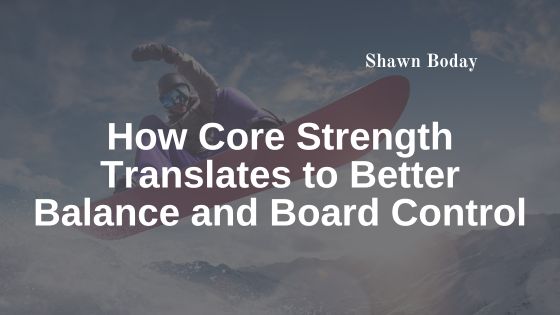
In snowboarding, balance and control are everything. While leg strength often gets the spotlight, the core plays a far more important role in how efficiently a rider moves, reacts, and stays stable on the board. Core strength is the foundation that connects the upper and lower body, allowing movements to stay smooth, controlled, and purposeful. Without it, even strong legs struggle to maintain consistent balance.
What the Core Really Does in Snowboarding
The core is more than just the abdominal muscles. It includes the lower back, obliques, deep stabilizers, and hip muscles that support posture and movement. On a snowboard, the core acts as a stabilizing hub, keeping the torso aligned while the legs and feet adjust to terrain, speed, and turn shape.
Every turn, edge change, and terrain adjustment relies on the core to manage rotation and prevent unwanted movements. A weak core allows the upper body to twist independently from the lower body, leading to instability and delayed reactions.
Improved Balance Through Stability
Balance on a snowboard is dynamic, not static. Riders are constantly adjusting to uneven snow, changing slopes, and variable conditions. A strong core allows these adjustments to happen quickly and efficiently. Instead of overcorrecting with the arms or shoulders, the rider can make subtle corrections through the hips and torso.
This stability becomes especially noticeable on uneven terrain, such as tracked powder or variable snow. Riders with good core strength stay centered over the board, maintaining consistent edge contact and reducing the chance of catching an edge.
Better Edge Control and Turn Precision
Core engagement plays a critical role in edge control. During a turn, the core helps regulate how pressure is distributed between the feet and how smoothly the board transitions from one edge to the other. Strong obliques and hip stabilizers support controlled rotation, allowing the lower body to guide the board without excessive upper body movement.
This results in cleaner turns, better grip on firm snow, and more predictable board response. Riders often notice that with improved core strength, turns feel smoother and require less effort.
Reduced Fatigue and Greater Endurance
A strong core also reduces overall fatigue. When the core is weak, the legs and lower back compensate, leading to quicker exhaustion. By sharing the workload, the core allows movements to stay efficient and balanced, conserving energy throughout the day.
This endurance advantage becomes especially important during long runs or challenging conditions, where maintaining form is key to staying in control.
Core Strength and Air Awareness
For riders who enjoy jumps, side hits, or small drops, core strength directly impacts air awareness and landing control. A stable core keeps the body compact and aligned in the air, making it easier to spot landings and absorb impact smoothly.
Final Thoughts
Core strength is a fundamental but often overlooked component of snowboarding performance. By improving balance, enhancing edge control, reducing fatigue, and supporting confident movement, a strong core translates directly to better board control. Riders who invest time in building core strength often find that their riding feels more stable, efficient, and enjoyable across all conditions.
